There are no items in your cart
Add More
Add More
| Item Details | Price | ||
|---|---|---|---|

Psychology is often misunderstood as a subject that demands heavy memorisation—but the 2027 curriculum tells a very different story. Today, Psychology is concept-driven, real-life connected, and designed to help students understand rather than recall in fear. Once the fundamentals are clear, ideas fall into place naturally, confidence grows, and learning becomes meaningful. Whether or not Psychology was your first choice, it equips you with insight into human behaviour—an advantage in every field, because every career ultimately works with people.
What you read in this section of the portal is not “information” to be consumed once, but a set of guiding principles for how you must work with IB Psychology over two years. Treat this section as your compass. IB Psychology - 2027 rewards students who understand how learning unfolds, not just what is to be learned. The guidelines here are meant to help you pace yourself, revisit ideas deliberately, and build understanding in layers—moving from clarity of concepts, to confident application in unfamiliar contexts, and finally to sharp evaluation and synthesis. If you follow what is written here seriously, you will know when to focus on foundations, when to practise thinking, and when to refine exam responses, instead of panicking close to exams. This section is designed to help you avoid common traps—over-memorisation, fragmented study, last-minute cramming—and instead develop the habit of following up: connecting today’s learning with tomorrow’s questions, earlier topics with later contexts, and content with assessment demands. Students who internalise these guidelines early do not just score better; they experience less anxiety, more control, and clearer thinking throughout the course. Read this section not as instructions, but as a roadmap for how to survive, grow, and excel in IB Psychology.
The 2027 curriculum represents a decisive shift in philosophy. Psychology is no longer framed primarily as content to be covered, but as knowledge to be applied across contexts through concepts. The new model explicitly integrates concepts, content, and contexts, with psychological literacy as the central aim. This reflects a deeper truth about modern psychology: real-world behaviour cannot be understood by isolated studies, but by patterns, interactions, and interpretation. The urgency for change came from three realities: Students struggled to transfer knowledge to unfamiliar scenarios. Exams increasingly rewarded application, synthesis, and evaluation, not recall. Psychology as a discipline evolved, with greater emphasis on data interpretation, ethics, and real-world claims (especially in media and technology contexts).
The new curriculum responds directly to this by:
The 2025 IB Psychology curriculum, first assessed in 2027, represents a major shift in how psychology is taught, learned, and assessed. The change is not cosmetic. It reflects the IB’s move away from content-heavy memorisation toward concept-based, research-oriented thinking that mirrors how psychology actually works as a discipline.
At its core, the new curriculum is designed to help students think like psychologists, not just recall studies.
In the pre-2025 curriculum, students studied core approaches and then selected two optional topics from a list such as Abnormal Psychology, Health Psychology, Human Relationships, or Sport Psychology. This meant that two students completing IB Psychology could finish the course having studied very different content.
The 2025 curriculum removes optionality and replaces it with four compulsory contexts that all students must study:
Learning and Cognition
Health and Well-being (which integrates elements of the old Health and Abnormal options)
Human Relationships
This change ensures conceptual coherence and equity. Every student now develops understanding across the same foundational areas of human behaviour.
Previously, success in IB Psychology often depended on how well students could memorise studies and reproduce them in exams.
The new syllabus shifts the focus to six core concepts:
Bias
Causality
Measurement
Perspective
Responsibility
Students are now expected to apply these concepts across contexts, using research as evidence rather than as isolated facts to be recalled. Studies are still important, but they are no longer the end goal. They are tools for thinking.
This reflects a deeper truth about psychology: knowledge is interpretive, contextual, and limited, not absolute.
One of the most significant changes is the Internal Assessment (IA).
In the old curriculum, students conducted and wrote up a full experimental report, often focusing more on procedural compliance than genuine research thinking.
In the new curriculum, both SL and HL students submit a research proposal instead. This proposal requires students to:
Identify a meaningful research question
Justify it theoretically
Choose appropriate methods
Consider ethical, methodological, and practical constraints
This aligns more closely with real psychological research, where planning and justification are as important as data collection.
The 2025 curriculum introduces mandatory class practicals in each of the four contexts.
Rather than learning research methods in the abstract, students must now actively engage in research activities—designing questions, collecting data, analysing patterns, and reflecting on limitations.
This replaces the older approach, where research methods were often taught theoretically and disconnected from actual practice.
The aim is clear: students should experience psychology as a process, not just as content.
In the previous curriculum, the HL extension sometimes felt detached or unevenly integrated.
The new syllabus explicitly anchors the HL extension in deeper exploration of:
Culture
Motivation
Technology
These themes are examined across all four contexts, rather than as isolated additions. This gives HL students a more coherent and meaningful extension of core ideas, rather than extra content for its own sake.
While Paper 1 remains broadly similar in structure, Paper 2 is now firmly built around the four compulsory contexts, ensuring alignment between teaching and assessment.
For HL students, Paper 3 places much stronger emphasis on:
Data interpretation
Research design
Methodological reasoning
This reflects the curriculum’s overall shift toward analytical and evaluative skills, rather than recall.
The new syllabus reinstates clear learning outcomes, replacing the looser and more ambiguous topic descriptions of the previous guide.
This provides:
Better clarity for teachers
Clearer expectations for students
Stronger alignment between teaching, learning, and assessment
The IB Psychology curriculum evolved because psychology itself has evolved.
Modern psychology is not about collecting isolated facts. It is about:
Evaluating evidence
Understanding limitations
Balancing multiple explanations
Applying concepts across contexts
The 2025 curriculum reflects this reality. It prioritises critical thinking, conceptual understanding, and authentic research engagement, preparing students not just for exams, but for university-level psychology and informed thinking about human behaviour.
Standard Level (SL) and Higher Level (HL) students study the same psychological foundation. Both engage with the same approaches to behaviour, the same core concepts, and the same real-world contexts. The distinction between SL and HL is therefore not about what psychology is studied, but about how deeply students are expected to reason with it. At SL, students are trained to develop psychological literacy at a foundational level. They learn to explain behaviour accurately, apply psychological ideas to unfamiliar situations, and show emerging evaluative awareness. SL focuses on building clarity of understanding, appropriate use of terminology, and the ability to connect psychological explanations to real-world behaviour in a structured way. At HL, students are expected to move into advanced psychological reasoning. HL students must integrate ideas across approaches, apply concepts more flexibly across contexts, and evaluate evidence with greater precision. Rather than describing explanations, HL students justify them, compare perspectives, and consider the implications and limitations of psychological knowledge.
Both SL and HL students complete Paper 1 and Paper 2, but the level of reasoning expected differs. In Paper 1, SL responses demonstrate clear explanation and application, while HL responses show deeper conceptual organisation, tighter argument structure, and more sophisticated integration of ideas. In Paper 2, both levels engage with research in context, but HL students are expected to show stronger methodological judgment, clearer evaluative reasoning, and greater awareness of how research quality affects conclusions. HL students also complete Paper 3, which is the most significant point of difference. This paper assesses the ability to interpret and evaluate unfamiliar quantitative and qualitative data. HL students must analyse evidence, judge credibility, identify limitations, and synthesise conclusions in a way that mirrors authentic psychological research reasoning.
SL students aim to understand and apply psychology well. HL is not more demanding, but it requires greater independence, integration, and critical maturity in how psychological knowledge is used. In essence, SL builds strong psychological understanding, while HL transforms that understanding into disciplined, evaluative, and research-informed thinking—the level of engagement the 2025 IB Psychology curriculum ultimately seeks to develop.
Ref: This embedded outline is an original presentation informed by publicly available International Baccalaureate® Psychology curriculum documentation. The purpose of embed is to stimulate IB students to read IB official documents.
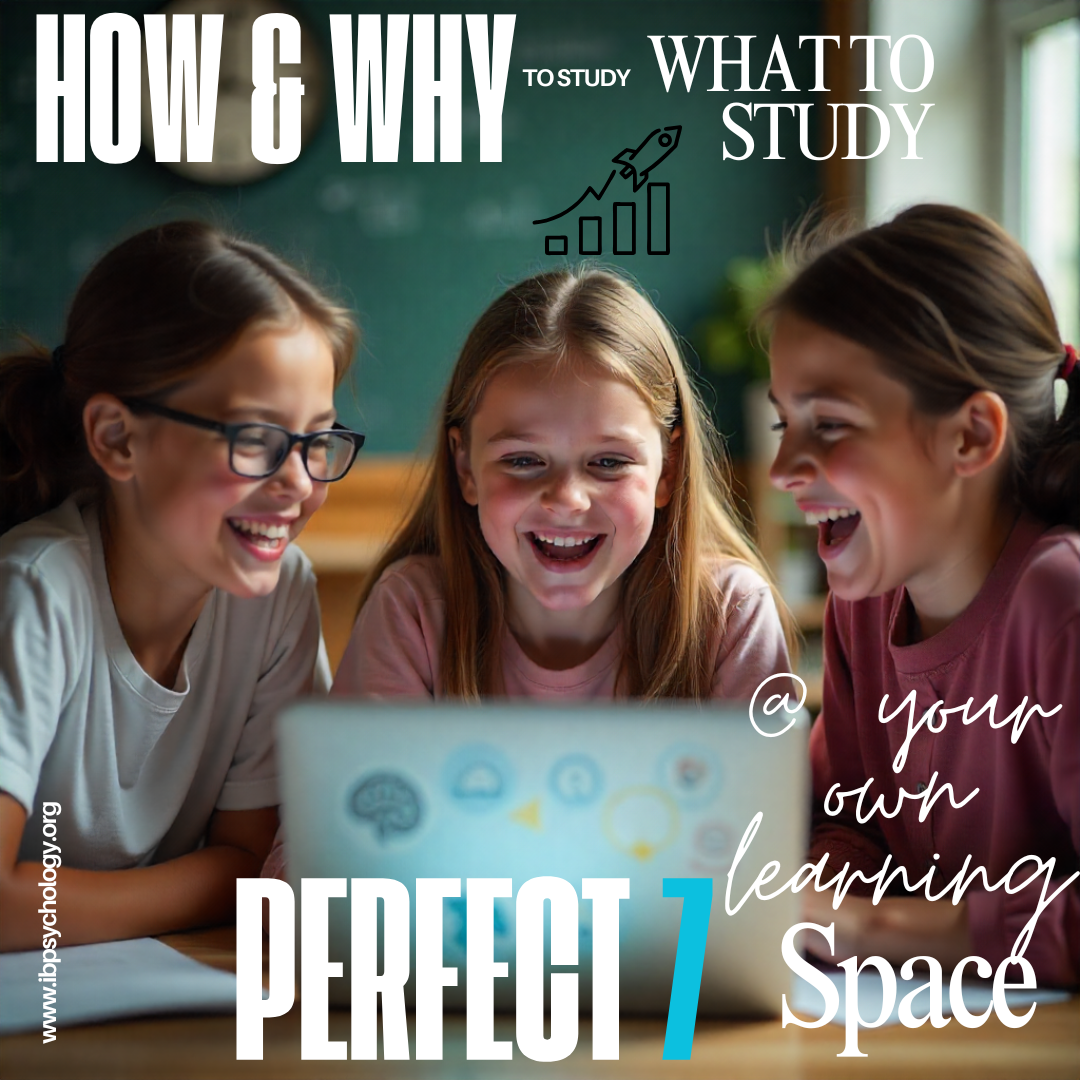
For preparing students for the portal and the IB Psychology - 2027, this course is designed as a guided entry point.The portal anchors the IB framework and prepares DP students to work confidently within it. Before students are asked to write answers, evaluate studies, or analyse data, they are first trained to understand how the curriculum itself is structured and why it is designed the way it is. Students are gradually oriented to the three core framework elements—concepts, content, and contexts—and shown how these interact to explain behaviour. This means that when students encounter questions in Papers 1, 2, or 3, they are not reacting to unfamiliar demands. They already recognise whether the task requires explanation, application, or evaluation, and which conceptual lens is being assessed. The portal therefore acts as a thinking scaffold. It prepares students to interpret psychological problems, research stimuli, and real-world scenarios using the same reasoning structures that examiners expect—long before formal exam practice begins.
My approach to IB Psychology 2027 is grounded in the way the subject is now designed to be learned and assessed. Built around the IB Psychology - 2027 curriculum model focused on concepts, content, and contexts in explaining behaviour through biological, cognitive, and sociocultural lenses, the course highlights on how psychological knowledge is produced through research, and how concepts such as bias, causality, measurement, and responsibility shape interpretation and evaluation. Learning is structured to develop psychological literacy—so that students can apply understanding to unfamiliar situations, evaluate evidence critically, and justify conclusions with clarity. This approach aligns directly with outline of the IB Psychology - 2027 guide and prepares students not just to answer questions, but to think, reason, and write as psychologists under the demands of the IB Psychology - 2027 assessment model.
The course upcoming is intentionally designed to support self-regulated, heutagogical learners throughout their learning journey of IB Psychology - 2027. Students are encouraged to take responsibility for pacing, reflection, and consolidation. Rather than being told what to memorise, they are trained to ask better questions, recognise patterns, and justify their reasoning. By the time students fully engage with the portal, they are not dependent on templates or rehearsed answers. They are equipped to:
For students who benefit from guided discussion and targeted feedback, personalised mentoring sessions are available.
 Launch your Graphy