There are no items in your cart
Add More
Add More
| Item Details | Price | ||
|---|---|---|---|

Many students believe that serious exam preparation is a solitary act. Headphones on. Notes open. Silence. Focus. And while individual study is important, psychology itself tells us something counter-intuitive: some of the deepest learning happens when thinking is shared. When students explain a concept to a peer, challenge an argument, or debate which study fits an ERQ better, the brain engages in a process far richer than memorisation. This is not “revision talk.” This is cognitive restructuring. From a biological perspective, collaborative learning activates multiple systems at once. The act of explaining engages the prefrontal cortex, forcing the brain to organise, prioritise, and verbalise ideas. At the same time, social interaction releases oxytocin, a hormone associated with trust and reduced stress. Lower stress means reduced cortisol interference—making memory retrieval and reasoning smoother. In simple terms: when students feel safe thinking out loud, the brain thinks better. Cognitive psychology adds another layer. When you hear a peer explain a concept differently from how you understand it, your brain experiences cognitive conflict. This mild discomfort is not harmful—it’s productive. It forces the brain to reconcile perspectives, refine schemas, and strengthen conceptual clarity. This is exactly the kind of thinking IB examiners reward. Social psychology explains why this works so powerfully. Learning in a group creates norms of reasoning. Students begin to internalise what counts as a “strong explanation,” a “weak evaluation,” or an “irrelevant point.” Over time, these external standards become internal guides, improving independent exam performance. This is why students who discuss psychology often write better answers—even when they revise less. However, not all group study is effective. Collaborative learning only works when it is structured around thinking, not sharing notes. Simply dividing topics or exchanging summaries keeps learning shallow. What changes the brain is:
1. Social Constructivism & Zone of Proximal Development
Proposed by Lev Vygotsky
Vygotsky showed that higher-order thinking develops first through social interaction and only later becomes internalised. His theory of social constructivism argues that learning is not just an individual cognitive process, but a shared one. Through dialogue, questioning, and explanation, students operate within the Zone of Proximal Development (ZPD)—the space where learning is most powerful because it is supported by others’ perspectives. This explains why debating studies, explaining concepts aloud, and challenging peers leads to deeper understanding than silent memorisation.
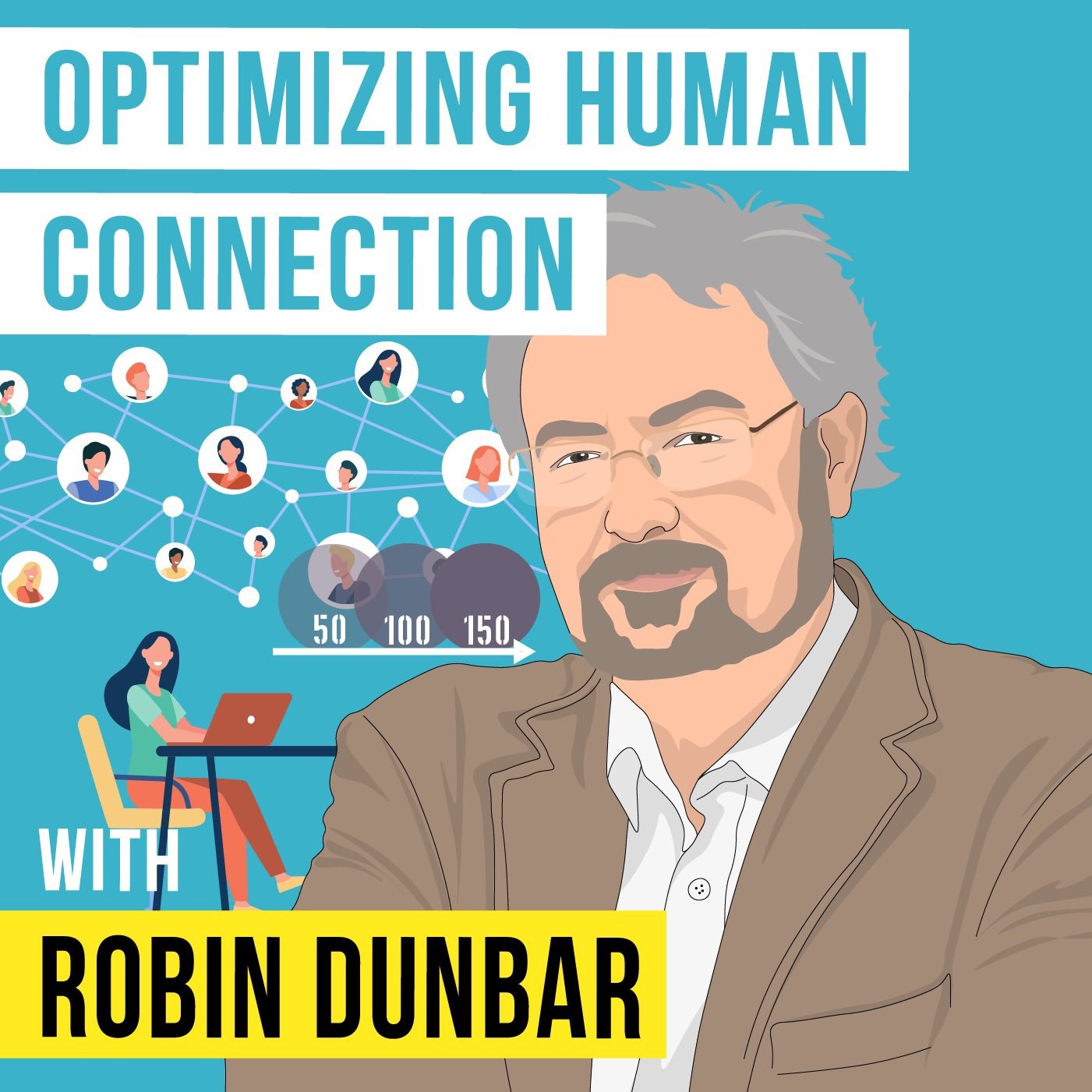
2. Social Brain Hypothesis developed by Robin Dunbar
Dunbar’s Social Brain Hypothesis proposes that the human brain evolved primarily to manage social relationships, not solitary problem-solving. Complex reasoning, communication, and perspective-taking are therefore biologically optimised in social contexts. In learning environments, this means that discussing ideas, negotiating meaning, and responding to others’ arguments naturally activate the brain’s strongest cognitive systems. Reduced stress through social connection further enhances memory and reasoning, making shared learning more efficient and durable.
Deep learning is not just stored in the brain—it is constructed through interaction and then internalised.
Mitra’s work shows that learning deepens when students think together, question each other, and co-construct understanding—often without direct instruction. His findings strongly echo Vygotsky’s social constructivism, demonstrating that explanation, debate, and peer interaction drive cognitive restructuring far more effectively than solitary memorisation. For IB students, this reinforces why discussion-based revision leads to clearer explanations, stronger evaluation, and more confident independent writing.
 Launch your Graphy