There are no items in your cart
Add More
Add More
| Item Details | Price | ||
|---|---|---|---|

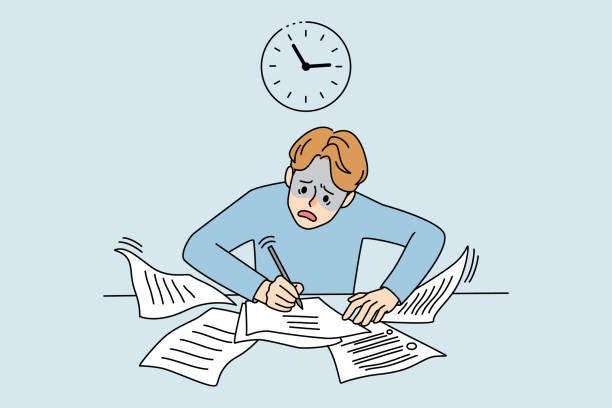
Most students think exam pressure shuts the brain down. That stress causes blackouts and destroys memory. Psychology tells a more precise story: the brain adapts to pressure if it has been trained to meet it. What looks like “coping” is actually neural adaptation. When you practise answering IB Psychology questions under timed, exam-like conditions, the brain is not just revising content—it is learning how to function in demanding environments. Under moderate, familiar pressure, the brain recalibrates its systems. Dopamine supports goal-directed focus, while repeated decision-making strengthens functional pathways in the prefrontal cortex (selection, inhibition, evaluation) and hippocampus (retrieval). Over time, the brain becomes more efficient at prioritising what matters and discarding what doesn’t. This is not about becoming stress-proof; it’s about becoming stress-competent. The brain learns, “This situation is challenging—but manageable.” Crucially, adaptation only occurs when pressure is gradual and structured. When stress is unfamiliar, cortisol overwhelms control systems and blocks access to memory. But when students repeatedly practise thinking under realistic constraints—planning, choosing studies, justifying evaluation—the stress response itself changes. Cortisol spikes become smaller and shorter. Executive control stabilises. This aligns with the Yerkes–Dodson principle: performance improves with arousal up to an optimal point. IB exams sit right there. Adaptation keeps the brain operating in that optimal zone. This is why passive reading feels safe but fails in the exam hall. Reading doesn’t train adaptation. Exams demand decisions: Which study fits? What strengthens the argument? What must be left out? Each decision trains adaptive control. Over time, the brain reallocates resources to meet these demands—functional adaptation—becoming faster, calmer, and more strategic. Confidence then emerges as a by-product of adaptation. Not motivational hype, but biology: repeated successful regulation teaches the brain that pressure is navigable. Retrieval improves. Organisation sharpens. Trust replaces panic. That adaptive learning transfers beyond exams—to interviews, presentations, and real-world decision-making. Pressure didn’t break the brain. Adaptation reshaped it.
References
Advice to IB exam students
Don’t train your brain to memorise more—train it to decide better under pressure. Exams don’t reward calmness or speed; they reward structure, selection, and control. Practise planning before writing, choosing what matters, and leaving out what doesn’t. Expose your brain to exam-like conditions often enough that pressure feels familiar, not threatening. When you do, confidence emerges naturally—not because you feel brave, but because your brain knows what to do.
Here are the key discoverers and theories that underpin the idea that the brain adapts (not just reacts) to pressure
“When everything feels important, the brain doesn’t know where to begin.”
“Rushing the answer often steals the thinking it needs.”
Cynader’s central message is that the brain changes according to how it is used, not according to intention or motivation. This directly echoes Hebbian learning—introduced by Donald Hebb—which states that repeated activation strengthens neural connections. In other words, the brain does not learn calm by being told to relax; it learns control by repeatedly functioning under challenge. How this explains beating panic (especially in exams): Panic is not a personality flaw—it is a miscalibrated neural response. When the brain repeatedly encounters pressure without successful regulation, it learns “pressure = threat.” But when pressure is paired with successful action (planning, choosing, structuring, deciding), Hebbian plasticity strengthens circuits linking the prefrontal cortex (control) with stress systems. Over time, the brain adapts: the same pressure now signals “this is manageable.” Cynader emphasizes that plasticity is experience-dependent. The brain adapts only when it is used correctly under realistic conditions. This is exactly why practising under timed, exam-like pressure reduces panic. You are not suppressing fear—you are rewiring the response. Panic fades because the brain has learned a better pattern.
"You don’t beat panic by avoiding pressure; you beat it by training the brain to function inside it."
"Stress doesn’t delete memory—it blocks the doorway. Regulation opens it again."
"When stress is untrained, memory goes offline. When stress is familiar, memory stays accessible."
Sapolsky explains, with biological precision, how cortisol suppresses hippocampal activity, blocking memory retrieval under stress. Crucially, he shows that stress does not erase memory—it temporarily shuts down access. This directly explains exam blackouts and supports the idea that training under manageable stress adapts the brain and reduces retrieval failure.
“Panic isn’t lack of knowledge—it’s loss of control.”
“Too much input without structure turns effort into exhaustion.”
 Launch your Graphy